

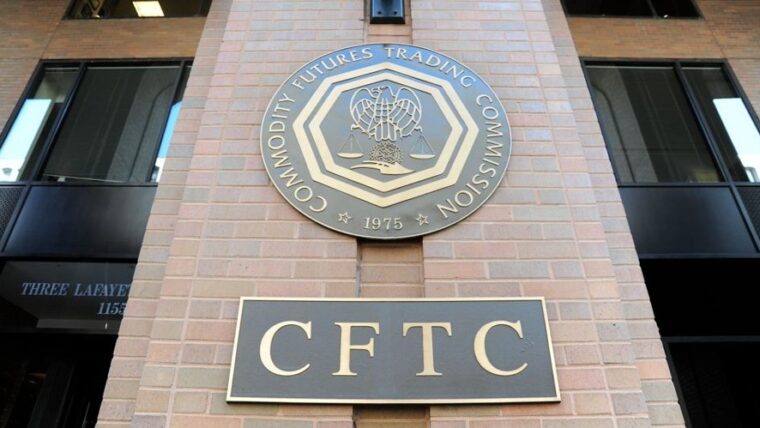
The U.S. Commodity Futures Trading Commission (CFTC) officially filed a federal lawsuit against the state of Wisconsin on Tuesday, April 28, 2026. This legal action serves as a direct challenge to the civil suits initiated by Wisconsin Attorney General Josh Kaul just five days prior, on April 23. In its original filing, the state of Wisconsin targeted major platforms including Kalshi, Polymarket, Crypto.com, Robinhood, and Coinbase, alleging that their “event contracts”—which allow users to wager on real-world outcomes like sporting events—constitute illegal forms of sports betting under state law. By intervening at the federal level, the CFTC is moving to protect its regulatory perimeter, asserting that these platforms operate under its exclusive federal oversight and that individual states lack the legal authority to unilaterally shutter federally registered derivatives exchanges.
The Jurisdictional Conflict Between Federal and State Oversight
At the heart of this confrontation is a fundamental disagreement over how to classify event-based contracts. Wisconsin officials argue that these products are “thinly disguised” sports wagers that bypass state consumer protections and anti-gambling statutes, characterizing the activity as a Class I felony under local law. Conversely, the CFTC contends that these instruments function as financial derivatives—specifically swaps—which are governed by the Commodity Exchange Act (CEA). Under this federal framework, the Commission maintains that it has been granted exclusive jurisdiction over such products, effectively preempting state-level attempts to restrict or prohibit the activity. This move by the CFTC signals a broad federal strategy to curb a growing trend of state-led enforcement actions, as this represents the fifth state that the Commission has sued this month alone in an attempt to maintain a unified national regulatory standard for digital asset and prediction platforms.
Implications for the Future of Prediction Markets
The ongoing legal dispute carries profound implications for the future of the prediction market industry in the United States. While the industry has sought to expand by providing innovative avenues for hedging and speculation on real-world events, the current “patchwork” of state-level enforcement poses a significant barrier to institutional adoption and long-term growth. The industry has frequently pointed to the uncertainty created by these conflicting state lawsuits as a primary deterrent for new capital, even as platforms like Kalshi and Polymarket see rising user demand. Federal courts have recently signaled potential support for the CFTC’s position, with some appellate rulings suggesting that state gambling laws cannot be enforced against platforms operating under federal registration. As the conflict intensifies, industry participants are watching closely to see if federal supremacy will ultimately shield these exchanges from state-level bans. Many analysts believe this escalating struggle, characterized by direct litigation between the CFTC and states like Wisconsin, New York, and Arizona, is now on a trajectory toward the U.S. Supreme Court, where a definitive ruling will be required to resolve the boundary between state-level consumer protection powers and federal financial derivatives regulation. Ensuring a consistent legal environment remains vital for the continued development of this sector, as firms and retail users alike require stability to engage with these complex, globally linked financial tools with genuine confidence.
