

Why Did Binance Withdraw Its Greece MiCA Application?
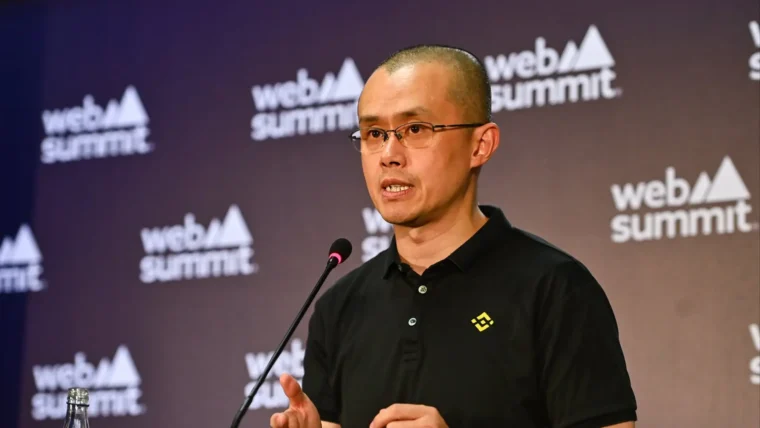
Binance founder Changpeng “CZ” Zhao said the exchange’s MiCA license application in Greece was fully compliant and close to approval before political forces intervened, prompting the company to withdraw the filing last week.
Zhao said at least one European Union regulator was ready to approve the application and that two EU countries had shown interest in hosting Binance’s MiCA authorization. The process, he said, became competitive before opposition emerged from other parts of the European policy structure.
“There were two countries in the EU that wanted the Binance application,” Zhao said. “Because of that, there was actually a bit of a back and forth and a fight over it. A bidding war of some kind. But unfortunately, there were other forces that were against it.”
The withdrawal comes at a sensitive point for crypto firms operating in Europe. MiCA is designed to create a single regulatory framework for crypto-asset service providers across the bloc, but firms still need authorization from a member state before they can passport services across the EU. Binance said it will now seek authorization in another EU country, while maintaining that it remains committed to securing approval in the coming months.
What Does The MiCA Setback Mean For Binance In Europe?
The immediate risk for Binance is timing. The July 1 deadline for unlicensed firms to cease EU operations creates pressure on any exchange still working through the approval process. Spain’s securities regulator has already said there will be no exceptions or extensions, leaving companies with limited room to manage transitional uncertainty.
Zhao described the outcome as damaging for both Binance and Europe. “I think overall the current situation, sadly, is a loss for Binance; it’s also a loss for Europe,” he said. “It’s a lose-lose situation.”
His comments frame the dispute as more than a licensing delay. For Binance, MiCA approval would provide a clearer legal pathway in one of the world’s largest regulated markets. For European policymakers, approval of a major global exchange would test whether MiCA can attract large firms into the formal regime rather than push activity toward offshore or fragmented alternatives.
Zhao compared the situation with earlier regulatory episodes in Japan and Singapore. Binance faced warnings in Japan as early as 2018 before later securing a full license from the country’s financial regulator in 2023. In Singapore, Binance withdrew in 2021 before users migrated to FTX, an outcome Zhao referenced as a warning about what can happen when large platforms exit regulated markets without stable alternatives.
Investor Takeaway
Binance’s MiCA withdrawal shows how crypto regulation in Europe remains exposed to political risk even under a harmonized framework. MiCA creates the legal structure, but national approvals, institutional pressure, and timing still determine market access.
Why Did CZ Criticize Strategy’s STRC Product?
Zhao also questioned the complexity of Strategy’s STRC preferred stock, saying he had tried several times to understand the product but still could not fully grasp it.
“I took multiple attempts trying to understand STRC,” Zhao said. “I just don’t think I understand it fully. I think many of these financial products are generally too complex — they’re over-engineered.”
STRC has traded as much as 26% below its $100 par value in recent weeks as bitcoin pulled back. Strategy responded by announcing a Digital Credit Capital Framework, raising STRC’s dividend rate to 12% and establishing a $1 billion repurchase program to help close the discount.
Zhao’s concern was not aimed at Strategy Executive Chairman Michael Saylor personally. He said Saylor had once spent 15 minutes explaining the product backstage at a conference, but the structure still remained difficult to follow. “I nodded my head a lot,” Zhao said, “but I still don’t really understand.”
He also separated the product’s complexity from Saylor’s reputation. “Michael is not some guy who’s just going to go out there and make a fake, scammy product,” Zhao said. “He’s a reputable guy; he is a Bitcoin die-hard.”
The issue, according to Zhao, is the use of bitcoin as an underlying base for leveraged or structured instruments. Bitcoin may have a strong long-term appreciation thesis, but its volatility can make complex credit-like products harder for investors to evaluate, especially when market prices move away from par value.
Investor Takeaway
Zhao’s comments on STRC point to a wider market concern: bitcoin-linked financial products are becoming more sophisticated, but complexity can make risk harder to price when volatility rises and discounts widen.
What Else Did CZ Disclose?
Zhao also said he donated $2 million to Prison Professors, a nonprofit run by Michael Santos, one of his prison consultants, after completing his 4-month federal sentence. The donations were made through 4 payments of $500,000 each after his release.
Santos, who served 26 years for a first-time drug trafficking offense, runs the organization to help incarcerated people prepare for reentry through education. Zhao said he kept the donations private until Santos asked to disclose them publicly about 2 weeks ago in an effort to encourage other inmates.
Zhao also confirmed that he invested about $500 million in Elon Musk’s Twitter takeover for roughly 1% of equity, saying he wanted to support a platform he viewed as important for freedom of speech. He said he later messaged Musk when X Money was being launched to ask whether Binance could become a partner.
Musk replied that X Money was staying away from crypto for now, Zhao said. Still, Zhao said he hopes X eventually develops into a global payments platform, comparing the opportunity in payments with what Starlink achieved in internet access.
Taken together, Zhao’s comments show how he remains active in crypto policy, market structure, and platform strategy despite stepping back from Binance’s formal leadership. His remarks on MiCA, STRC, and X Money all point to the same underlying issue: crypto’s next stage is being shaped less by token trading alone and more by licensing, financial engineering, and integration with mainstream platforms.
