

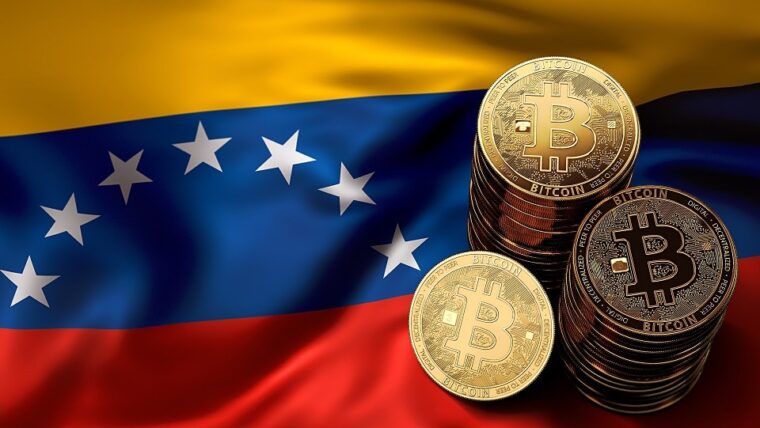
The systematic erosion of local purchasing power across inflation-stricken economies has transformed digital assets from a speculative investment into a primary engine of financial survival. In Venezuela, where annual hyperinflation continues to devastate the domestic bolívar, citizens are turning en masse to Tether (USDT) to safeguard their basic capital. Driven by an unstable local currency, rigid capital controls, and a heavily restricted supply of physical greenbacks, the dollar-pegged stablecoin has seamlessly integrated into daily commerce, frequently referred to by locals as the “Binance dollar.”
The reliance on stablecoins reflects a profound shift in consumer behavior away from standard legacy banking channels. Recent regional data indicates that roughly 85% of standard commercial transactions across the country utilize USDT to some capacity. Rents, grocery bills, building management fees, and private sector salaries are routinely priced and settled directly in digital dollars, bypassing a local banking infrastructure that lacks the credibility to protect deposits from accelerating devaluation.
The Peer-to-Peer Lifecycle Provides Financial Oxygen
The infrastructure enabling this grassroots monetization is Binance’s highly active Peer-to-Peer (P2P) trading desk, which serves as a vital financial lifeline for millions of Venezuelans. Through the P2P engine, local merchants and ordinary consumers can frictionlessly trade local bolívars for digital stablecoins in seconds, creating an autonomous, parallel liquidity network that operates entirely outside state-sanctioned credit channels.
This decentralized marketplace has effectively insulated small-to-mid-sized enterprises from sudden local currency drops. Because the value of the bolívar can collapse by double digits in a matter of weeks on parallel markets, business operators immediately convert daily fiat revenues into USDT before store closing to protect their profit margins. This high-velocity capital rotation has created a highly unique ecosystem where the internal P2P exchange rate on Binance frequently dictates the true market-clearing price for goods and services across major urban centers like Caracas and Maracaibo.
In terms of market realities, the official Central Bank Rate remains artificially fixed and highly restricted, forcing participants to look elsewhere for viable liquidity. Meanwhile, the parallel cash dollar market suffers from high physical friction and acute supply scarcity. In contrast, the Binance P2P USDT marketplace delivers deep liquidity and true market-clearing rates, making it the preferred reference point for local commerce.
Banking Blocks and Self-Imposed Compliance Rules
Despite providing essential economic relief, navigating the digital asset space in Venezuela requires strict adherence to unwritten operational codes to avoid regulatory bottlenecks. Local commercial banking institutions, particularly the dominant Banco de Venezuela, have ramped up their oversight mechanisms on high-frequency domestic transfers. To avoid triggering automated fraud-detection systems or getting hit with catastrophic account freezes, P2P traders follow a rigid set of self-imposed community compliance guidelines.
First, initiating or accepting transactions from third-party bank accounts is strictly avoided, ensuring the name registered on the banking portal exactly matches the verified Binance user identity. Second, users make sure to leave the bank transfer description field completely blank or use generic terms like “payment” to prevent automated algorithms from flag-scanning for keywords like “Binance,” “Crypto,” or “USDT.” Finally, traders carefully cluster their activity around deep local cash pools to guarantee transactions clear within minutes before regional price spikes alter the value distribution.
This mass migration to tokenized assets underscores a broader macroeconomic reality playing out across emerging markets where a sovereign fiat currency fails to provide basic stability. While the state continues to impose strict capital controls to preserve what remains of the bolívar’s velocity, the rapid dollarization of the digital layer proves that the Venezuelan public has firmly embraced the efficiency and un-debasable nature of the onchain economy.
