

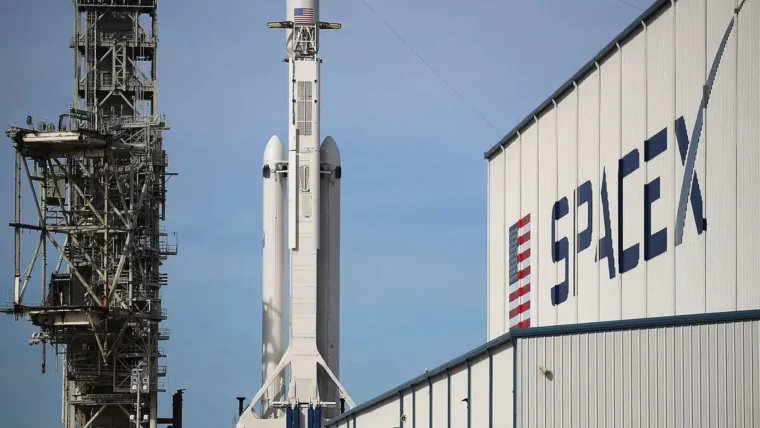
Why Is SpaceX Moving Faster on Its IPO?
SpaceX is aiming to list its shares as early as June 12, with Nasdaq selected as the trading venue for what could become the largest stock market debut on record, according to people familiar with the matter.
The rocket and satellite company has accelerated its IPO timetable after a faster-than-expected review of its paperwork by the U.S. Securities and Exchange Commission, the sources said. The company is now aiming to make its prospectus public as early as next Wednesday, begin its roadshow on June 4 and price the share sale as early as June 11.
The faster schedule brings forward a process that had previously been expected later in June, around Elon Musk’s birthday. The discussions remain private, and SpaceX did not immediately respond to requests for comment. Nasdaq and the SEC declined to comment.
The company is expected to trade under the ticker SPCX. The symbol had previously been used by Tuttle Capital Management’s SPAC-focused ETF before the firm changed its ticker to SPCK in April, a move that sparked market speculation over whether SpaceX could claim the newly available symbol.
Why Does Nasdaq Matter for the Listing?
SpaceX’s choice of Nasdaq would mark a major win for the exchange over the New York Stock Exchange, especially given the size and public attention attached to the listing. Reuters previously reported that SpaceX was leaning toward Nasdaq as it sought early inclusion in the Nasdaq-100 index.
The timing also follows Nasdaq’s rollout of fast-entry rules designed to speed the inclusion of newly listed large-cap companies into its benchmark Nasdaq-100 index. Other major index providers, including S&P Dow Jones Indices and FTSE Russell, have introduced similar rules to bring large new listings into benchmarks more quickly.
For a company of SpaceX’s size, index access could matter almost as much as the IPO venue itself. Inclusion in major benchmarks can drive passive fund demand, raise institutional visibility and support liquidity in the early weeks of trading. Nasdaq has previously said it sought market feedback on its fast-entry rules and uses a transparent index governance process.
Investor Takeaway
SpaceX’s Nasdaq plan is not just an exchange choice. It reflects how major listings now compete for index access, passive flows and early trading depth, especially when the issuer is already large enough to affect benchmark demand.
How Large Could the SpaceX IPO Be?
SpaceX is likely to target a raise of about $75 billion at a valuation of roughly $1.75 trillion, Reuters has previously reported. That would make the offering the largest stock market flotation ever and would place the company among the most valuable public companies from its first day of trading.
The targeted valuation would also mark a sharp increase from the $1.25 trillion combined valuation set when SpaceX merged with Musk’s artificial intelligence startup xAI in February. That jump gives investors a narrow window to assess whether the company’s launch, satellite internet and AI-linked strategy can justify one of the richest public-market entries in history.
Morgan Stanley, Bank of America, Citigroup, JPMorgan and Goldman Sachs are leading the offering. Another 16 banks are expected to take smaller roles across institutional, retail and international channels, reflecting the expected size of global demand for the deal.
The IPO would also land in a year when other large technology and artificial intelligence companies are expected to test public markets. Anthropic and OpenAI are among the names expected to tap investors, setting up a crowded calendar for growth companies seeking public capital after a quieter period for listings.
What Does This Say About the IPO Market?
SpaceX’s accelerated listing plan comes as the IPO market recovers from a difficult stretch shaped by volatility tied to U.S. tariff policy and geopolitical uncertainty. A successful SpaceX offering would give bankers and exchanges a flagship deal capable of resetting expectations for the rest of the year.
The listing would also test how much demand remains for large private technology companies moving into public markets at premium valuations. Investors are likely to focus on SpaceX’s revenue mix, capital needs, Starlink growth, launch cadence and the financial links created by the xAI combination.
For Nasdaq, the deal would strengthen its grip on large technology listings. For investors, it would offer rare public access to one of Musk’s largest private companies, but at a valuation that leaves little room for weak execution. The success of the deal may depend less on brand recognition than on whether the prospectus gives public-market buyers enough detail to support a $1.75 trillion valuation.
