

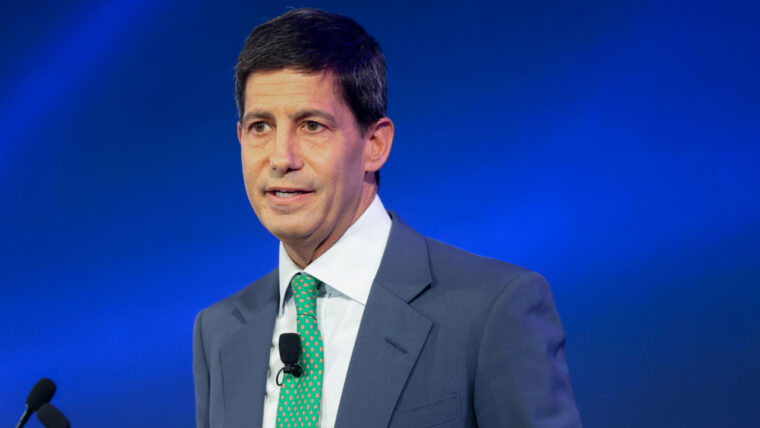
On May 13, 2026, the United States Senate officially confirmed Kevin Warsh as the next Chairman of the Federal Reserve in a fifty-four to forty-five vote. This narrow nine-vote margin represents the tightest confirmation in the history of the central bank’s leadership, reflecting a deeply polarized political climate and intense debate over the institution’s future independence from the executive branch. Warsh, a fifty-six-year-old former Federal Reserve governor and Morgan Stanley executive, was nominated by the administration earlier this year to replace Jerome Powell, whose term as chair formally concludes this Friday. The vote largely followed partisan lines, though several moderate voices suggested that Warsh’s prior experience during the 2008 financial crisis made him a pragmatic choice for a transition period characterized by digital transformation. This confirmation serves as the final legislative prerequisite for Warsh to assume control of the world’s most influential financial institution, marking the beginning of what many analysts believe will be a proactive and potentially disruptive era for American monetary policy.
A Mandate for Total Regime Change at the Central Bank
Kevin Warsh has campaigned on a platform of total regime change, frequently criticizing the current Federal Reserve for being overly political and opaque in its public communications. During his testimony before the Senate Banking Committee, he outlined a vision for a significantly smaller balance sheet and a more disciplined approach to monetary policy that prioritizes raw economic data over speculative forward guidance. Warsh has proposed tighter coordination with the Treasury Department on non-monetary economic policies, a move that he argues will allow for lower policy rates by reducing structural friction within the broader economy. However, critics like Senator Elizabeth Warren argue that this coordination could turn the Federal Reserve into a political tool for the executive branch. Warsh has dismissed these concerns, vowing to remain an independent actor while acknowledging the administration’s desire for a policy shift to stimulate domestic manufacturing and growth. His proposed framework would see the Fed move away from managing market expectations and toward a more reactive, stability-focused role that avoids over-signaling future moves.
Taking the Gavel Amid Global Economic Turbulence and Friction
The incoming Chairman faces a daunting economic landscape as he prepares to take his seat this Friday. Inflation remains a primary concern for the American public, fueled in part by rising energy costs stemming from ongoing geopolitical conflicts in the Middle East. This inflationary pressure complicates the administration’s public demands for aggressive interest rate cuts, as several members of the Federal Open Market Committee remain hesitant to loosen policy until price stability is firmly achieved. Adding to the internal friction, Jerome Powell has taken the unprecedented step of announcing that he will remain on the Board of Governors after his chairmanship ends, citing a need to defend the Fed’s historical independence against what he describes as increasing political pressure. Warsh’s first major test will arrive on June 16, 2026, when he is scheduled to chair his first meeting of the interest rate-setting committee. The global financial community is watching closely to see if Warsh can balance the administration’s demand for a regime change with the necessary caution required to prevent a resurgence of inflation in an increasingly unstable global macro environment where the dollar’s dominance is frequently challenged by emerging digital alternatives.
