

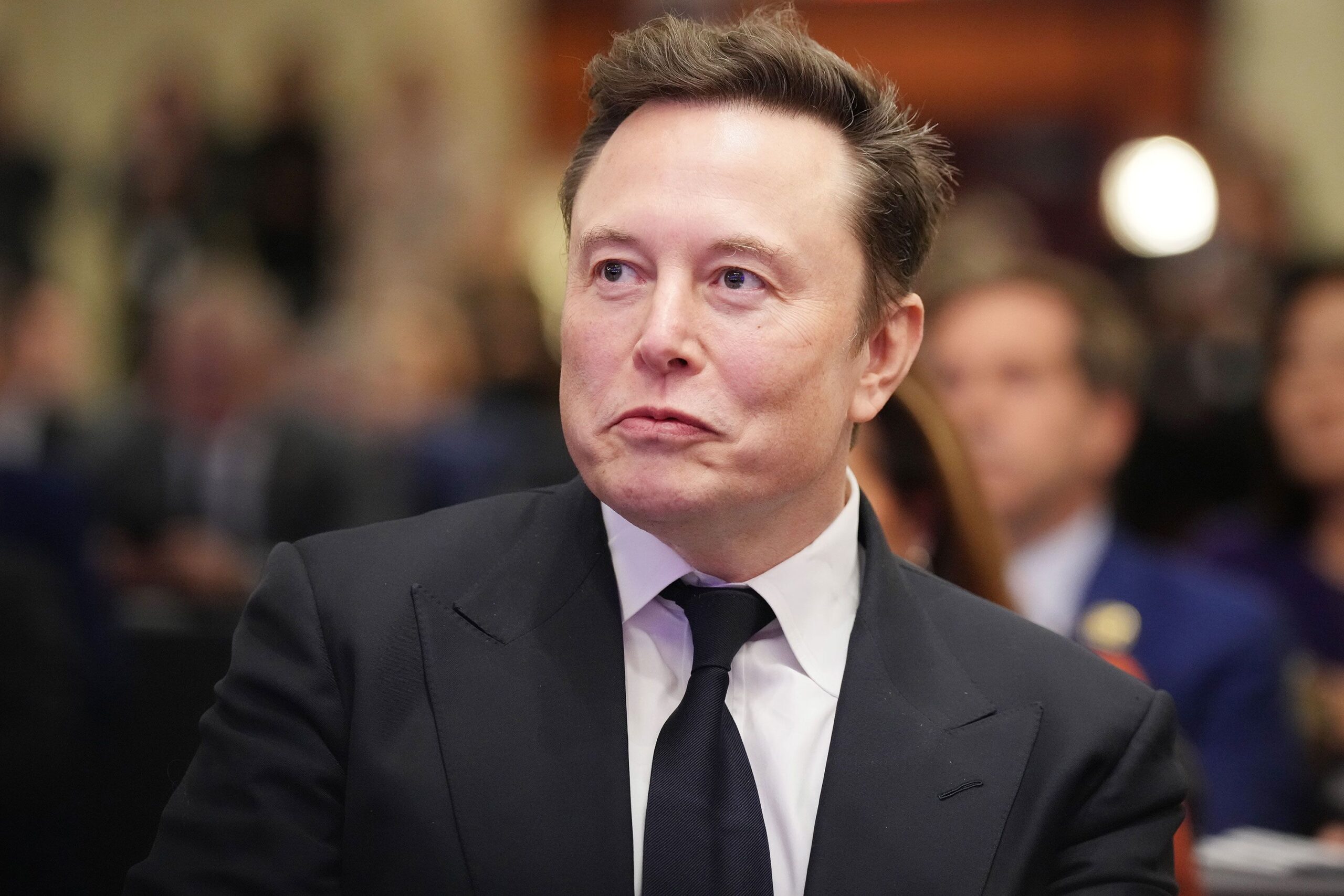
Elon Musk said xAI will no longer operate as an independent company and will instead be fully integrated into SpaceX under a new structure called “SpaceXAI,” marking a major consolidation of Musk’s artificial intelligence, social media, and aerospace operations.
The announcement came during discussions surrounding a new compute partnership between SpaceX and Anthropic, in which the AI startup behind Claude will gain access to the Colossus 1 supercomputer cluster originally developed by xAI. Musk confirmed on X that “xAI will be dissolved as a separate company” and that its AI products, including Grok, would operate under the SpaceXAI name going forward.
The move formalizes a broader restructuring that began earlier this year when SpaceX acquired xAI in an all-stock transaction valuing SpaceX at approximately $1 trillion and xAI at $250 billion, creating a combined entity valued near $1.25 trillion.
Analysts said the restructuring reflects Musk’s increasing focus on vertically integrating artificial intelligence infrastructure, energy systems, social media distribution, and space-based computing into a unified ecosystem capable of competing directly with OpenAI, Google, Microsoft, and Anthropic.
SpaceXAI Consolidates Musk’s AI Ambitions
The new structure places Grok, X, xAI’s data center infrastructure, and future AI initiatives directly under SpaceX management. Industry observers said the consolidation could simplify capital allocation, infrastructure deployment, and compute expansion at a time when AI companies face intensifying competition for energy, chips, and data center capacity.
Musk indicated that xAI’s original corporate structure required a broader rebuild, stating publicly that the company “was not built right first time around.” The restructuring follows months of leadership turnover inside xAI, where all original co-founders except Musk had departed by late March.
Under the new SpaceXAI structure, development of Grok and future AI models will continue while major computing operations shift toward larger infrastructure systems such as Colossus 2, a next-generation supercomputer cluster designed to exceed the capacity of the existing Colossus 1 system.
The restructuring also strengthens Musk’s long-term strategy of developing space-based AI infrastructure. Earlier this year, SpaceX outlined plans for orbital AI data centers powered by Starship launches and solar-based energy systems designed to overcome the electricity and cooling constraints increasingly affecting terrestrial AI facilities.
Industry analysts noted that combining AI infrastructure with SpaceX’s launch capabilities creates a potentially unique competitive advantage if demand for AI compute continues expanding at current rates.
Anthropic Partnership Signals Strategic Shift
The restructuring announcement coincided with a surprise partnership between SpaceXAI and Anthropic, despite Musk’s previous criticism of the company. Anthropic said it will gain access to more than 300 megawatts of compute capacity through Colossus 1, including over 220,000 Nvidia GPUs spanning H100, H200, and GB200 chips.
Musk said discussions with senior Anthropic executives convinced him the company was approaching AI development responsibly. He added that SpaceXAI reserves the right to reclaim compute capacity if Anthropic’s systems “engage in actions that harm humanity.”
The agreement reflects the growing importance of compute infrastructure within the AI sector as companies race to secure access to GPUs, electricity, and large-scale data center capacity. Analysts said leasing Colossus 1 to Anthropic allows SpaceXAI to monetize infrastructure assets while focusing internal development efforts on larger next-generation systems.
The consolidation also fuels speculation that SpaceXAI could eventually become the centerpiece of a broader Musk technology holding structure combining artificial intelligence, social media, robotics, semiconductors, and aerospace systems under a unified operational framework.
