

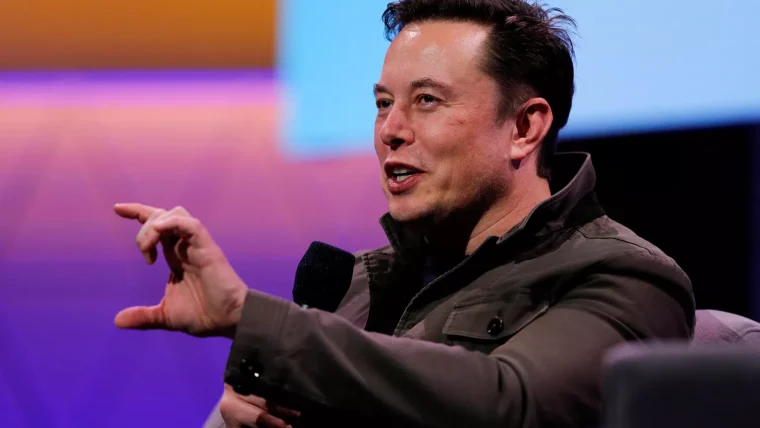
In a characteristically blunt series of statements during late April 2026, Elon Musk sparked a firestorm across the digital asset world by declaring that “most cryptocurrencies are scams.” Speaking during a live-streamed panel at a technology summit in California—and echoed in a series of late-night posts on X—Musk clarified his long-standing, often volatile relationship with the crypto industry. While he remains a vocal supporter of Bitcoin’s role as a store of value and Dogecoin’s utility as a “people’s currency,” his latest critique targeted the explosion of speculative memecoins, celebrity-backed rug pulls, and sophisticated AI-driven fraud that has come to define the 2026 market cycle. Musk’s comments were not a total rejection of blockchain technology, but rather a warning against the “casino-like” environment where 99% of new tokens lack any underlying utility or legitimate development team. He argued that the industry’s survival depends on purging parasitic projects that exist only to extract liquidity from retail participants.
The Proliferation of AI Deepfakes and Impersonation
A significant driver of Musk’s frustration is the weaponization of his own likeness in the very scams he is denouncing. By April 2026, AI-generated deepfakes reached a level of realism that allowed scammers to hijack YouTube and X streams, broadcasting realistic videos of Musk promising “double your money” giveaways. These sophisticated operations have drained over $1.3 billion from unsuspecting investors in the first half of the year alone. Musk noted that the ease with which bad actors can now deploy autonomous “drainer” contracts—which empty a user’s wallet the moment they connect to a fraudulent site—has turned the ecosystem into a minefield. “If you see a video of me telling you to send crypto to an address to get a return, it’s a scam. Period,” Musk emphasized, calling for more aggressive platform-level moderation and a “return to fundamentals” for the industry.
Regulatory Pressure and the “Clean-Up” Phase
Musk’s “scam” rhetoric coincides with a period of intense regulatory scrutiny following the 2025 GENIUS Act. Federal authorities have begun a massive crackdown on “pump-and-dump” schemes facilitated through decentralized launchpads, which have seen a failure rate of nearly 98% in recent months. Musk’s critique serves as a cultural signal that the “Wild West” era of crypto is facing a reckoning. By labeling the majority of the market as fraudulent, Musk is distancing his own ventures—such as X’s integrated payment systems and Tesla’s digital asset holdings—from the speculative rot he believes is stalling mainstream adoption. As the market enters the latter half of 2026, Musk’s warning acts as a sobering reminder: in an era of hyper-realistic AI and instant tokenization, the burden of verification has never been higher for the individual investor. The focus must shift toward established protocols with verifiable security and genuine economic purpose, rather than chasing the ephemeral gains of the latest trending but hollow altcoin, ensuring that the technology’s true potential is not overshadowed by the noise of bad actors seeking to exploit the uninformed.
