

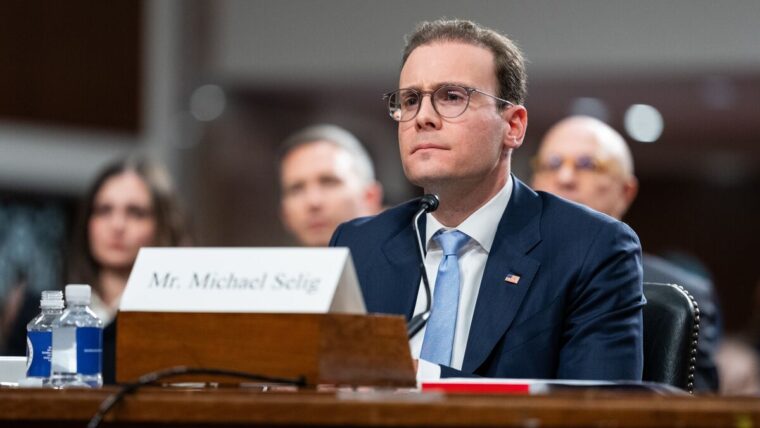
CFTC Chairman Michael Selig said the United States is paving the way for on-chain markets like Hyperliquid to come onshore, signaling a major shift in how regulators intend to treat crypto-native derivatives. His comments follow the agency’s approval of the first U.S.-regulated Bitcoin perpetual futures contract and a broader policy statement on how perpetual contracts should be listed under CFTC oversight.
The move is significant because perpetual futures, or perps, dominate crypto derivatives trading globally but have historically operated offshore or through decentralized venues outside traditional U.S. market infrastructure. Hyperliquid has become one of the most visible examples of that model, offering an on-chain order book for perpetual futures and attracting traders who want crypto-native speed, transparency and round-the-clock market access.
Selig has framed the CFTC’s new approach as an effort to bring activity that already exists into a regulated American framework. In a May statement, he argued that the question was not whether crypto perpetuals would exist, but whether they would exist under U.S. oversight, standards and rule of law. That marks a clear break from the prior regulatory posture, which left much of the market offshore.
Perpetual futures enter regulated markets
The CFTC’s May 29 actions opened the door for U.S.-listed perpetual contracts by approving a true Bitcoin perpetual contract on a registered exchange. Unlike traditional futures, perpetual contracts have no fixed expiration date. Instead, they use periodic funding payments to keep the contract price aligned with the underlying spot market.
That design fits crypto markets, which trade continuously and do not follow the opening and closing schedules of traditional exchanges. It also helps explain why perpetuals became the dominant derivatives product for digital assets. Traders can maintain continuous long or short exposure without rolling expiring contracts.
The CFTC’s policy statement, however, makes clear that perpetuals are not being approved without guardrails. The agency said the products have unique characteristics and should generally undergo case-by-case review, especially when they reference assets beyond Bitcoin. That review process is intended to address leverage, manipulation risk, customer protection, margin treatment and broader market integrity concerns.
For on-chain platforms, this could create a formal route into U.S. markets. Hyperliquid, Lighter and other crypto-native venues have shown that decentralized or semi-decentralized infrastructure can support deep derivatives liquidity. The regulatory question is whether those platforms can adapt to U.S. requirements around surveillance, customer protections, disclosures, market access and compliance.
On-chain finance moves toward Washington
The implications extend beyond Bitcoin perps. If the CFTC builds a workable pathway for crypto perpetuals, regulators may eventually confront similar questions around equity perps, real-world asset derivatives, tokenized collateral and 24/7 trading. Selig has already linked perpetuals to a broader modernization agenda involving tokenized collateral, market structure and prediction markets.
For Hyperliquid and similar venues, regulatory clarity could be both an opportunity and a challenge. A U.S. pathway could unlock institutional capital, expand legal access for American users and reduce the advantage of offshore exchanges. But compliance may also require changes to product design, leverage limits, governance, custody and user onboarding.
The competitive impact could be substantial. Incumbent exchanges such as CME and ICE have long dominated regulated derivatives, while crypto-native platforms have dominated perps through speed, user experience and global access. Bringing on-chain markets onshore would put those models into direct competition under a clearer regulatory framework.
The policy shift also reflects Washington’s changing view of crypto. Rather than pushing activity outside the country, the CFTC is now signaling that some crypto-native market structures can be brought inside the perimeter if they meet U.S. standards.
That does not guarantee immediate approval for platforms like Hyperliquid. The path from decentralized market design to regulated U.S. access remains complex. But Selig’s message is clear: the next phase of crypto regulation is not only about enforcement. It is about deciding which parts of on-chain finance can be rebuilt inside American markets.
