

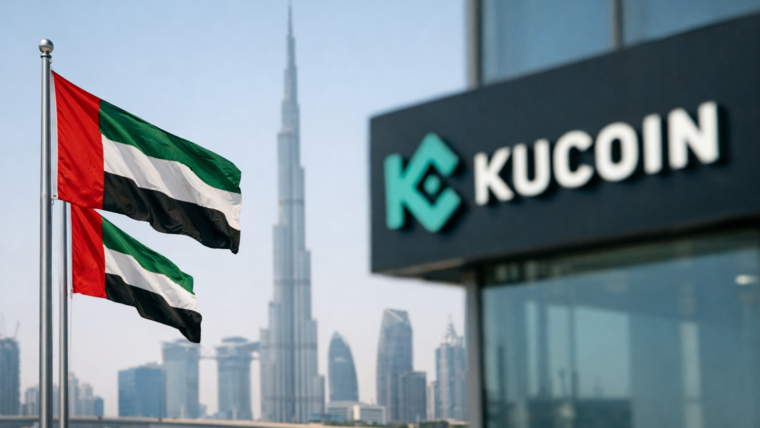
Why Is KuCoin Facing Pressure Over Delisted Assets?
KuCoin is facing renewed scrutiny after a Swiss investor said the exchange has not paid a Seychelles Supreme Court award of more than $2 million tied to tokens the platform had declared “abandoned.”
In a Dec. 11, 2025 ruling, the Supreme Court of Seychelles declared that Didier Rabl is the “sole proprietor and owner” of about 21 million CoinPoker tokens previously held for him on KuCoin. The court ordered 3 Seychelles-incorporated KuCoin entities to pay more than 2 million USDT, plus $10,000 in moral damages.
The case centers on how exchanges handle delisted assets when customers do not withdraw them before a deadline. KuCoin sent Rabl a series of delisting notices in 2021, warning that withdrawals of CoinPoker tokens would close on July 28 of that year. The emails said unwithdrawn funds would be treated as “abandoned” with “no rights to claim back.”
The court found that the emails “remained unread and unanswered” and that KuCoin delisted the token “without making any further attempt to notify the Plaintiff by post, telephone, or any alternative means.” KuCoin’s Seychelles entities did not appear or defend the case.
What Did The Court Say About Customer Ownership?
The court held that KuCoin did not become the beneficial owner of Rabl’s tokens simply by sending delisting notices. It found that the exchange remained obligated to safeguard the assets and honor lawful withdrawal requests.
That finding is important because many exchanges rely on delisting notices to close markets, halt withdrawals, or remove support for older tokens. The Seychelles ruling suggests that a customer’s property rights may survive a delisting deadline unless the platform’s original contract clearly states that unwithdrawn assets can be forfeited.
KuCoin’s terms of use at the time gave the platform broad powers to suspend or terminate accounts and limit liability. But the court found that the terms did not explicitly say that tokens left after a delisting would become KuCoin’s property.
A blockchain analysis report traced movements of the legacy Ethereum CoinPoker token and identified an address labeled “KuCoin 6” on Etherscan holding 21,000,000.0509 tokens, or about 5.9% of total supply. The finding adds a blockchain custody layer to a dispute that is otherwise rooted in contract law and customer notice.
Investor Takeaway
The ruling highlights a legal risk for exchanges that delist tokens without clear forfeiture terms. Customer assets may remain customer property even after a withdrawal deadline, especially where notice is limited to unread email warnings.
Why Does The Seychelles Regulatory Response Matter?
The Supreme Court directed its Registrar to serve the judgment on the Seychelles Financial Services Authority. The regulator confirmed it had received the judgment and said Mek Global Ltd, the KuCoin-linked company that applied for a virtual asset service provider license, had its application rejected on June 4, 2025.
The company was required to cease all business conducted in or from Seychelles. The regulator also said Peken Global Limited, one of the defendants in the case, chose to migrate its services outside Seychelles after the license application was rejected.
Under Seychelles’ Virtual Asset Service Providers Act, licensed exchanges must segregate client assets and maintain them at a 100% reserve. That requirement gives the case a broader policy angle. If an exchange is expected to segregate customer assets, a dispute over whether delisted tokens became exchange property cuts directly into custody standards and client protection rules.
The case may also matter for exchanges operating across multiple jurisdictions. Offshore corporate structures can complicate enforcement, but court judgments and regulator notices can still create reputational pressure, licensing obstacles, and additional scrutiny in other markets.
What Are The Limits Of The Judgment?
The ruling has limits. Legal expert Joshua Chu, co-chair of the Hong Kong Web3 Association, said, “It should be noted from the outset that this judgment was decided entirely ex parte,” adding that KuCoin’s entities “never appeared, never defended, and never submitted to jurisdiction.”
Chu also said the decision is “first instance only,” with “no binding force outside Seychelles.” That means the judgment may influence similar disputes, but it does not automatically settle how courts in other jurisdictions would treat delisted tokens, unread notices, or exchange custody obligations.
Still, the legal reasoning may be relevant beyond Seychelles. Chu said the court proceeded on the basis that the exchange-customer relationship was “at minimum contractual, obliging the exchange to safeguard the assets and to honor lawful withdrawal instructions.”
He added that a virtual asset service provider’s unexplained failure to comply with a final Supreme Court order concerning customer assets would sit uneasily with standards of integrity, cooperation with courts and regulators, and respect for client property.
Investor Takeaway
For investors and token issuers, the case shows that delisting risk is not only about liquidity. It also involves custody rights, contract wording, withdrawal access, and whether exchanges can prove they gave adequate notice before restricting customer assets.
What Comes Next For The Investor And KuCoin?
Rabl said he has not received payment from the Seychelles entities named in the judgment and is preparing additional legal action in Seychelles to enforce the award and potentially seek further damages.
The enforcement stage may be harder than winning the judgment. If the relevant entities have moved operations outside Seychelles or hold limited assets there, collecting the award could require further legal proceedings, asset tracing, or recognition efforts in other jurisdictions.
For KuCoin, the case adds to broader regulatory questions around exchange licensing, customer asset segregation, and offshore accountability. For the wider market, it creates a warning for platforms that use broad delisting language without making ownership consequences explicit in their customer terms.
The central issue is simple but significant: delisting a token does not necessarily erase a customer’s property claim. As crypto exchanges continue removing low-liquidity assets and legacy tokens, the legal treatment of unwithdrawn balances may become a larger compliance risk.
