

Why Did The Appeals Court Reject Bankman-Fried’s Case?
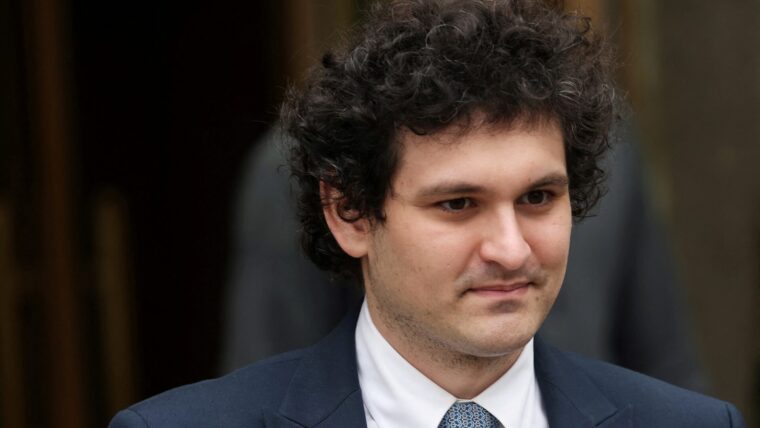
Former FTX CEO Sam Bankman-Fried lost his appeal to overturn his 25-year prison sentence after arguing that the original trial did not give him a fair chance to defend himself.
On Friday, the U.S. Court of Appeals for the Second Circuit upheld an earlier district court decision that found Bankman-Fried guilty on 7 counts of fraud and conspiracy. The ruling leaves in place one of the most consequential criminal convictions to come out of the collapse of FTX and Alameda Research.
Bankman-Fried had argued that customer investments were sound, that FTX had enough liquidity to make customers whole, and that the trial court wrongly blocked him from introducing certain evidence. A 3-judge panel rejected those claims, siding with the district court’s handling of the case.
The appeals court said the trial record showed that Bankman-Fried knowingly used customer assets while publicly presenting FTX as financially secure. “The overwhelming evidence presented at trial proved that Bankman-Fried knowingly and intentionally committed large-scale fraud on FTX’s customers,” the court said.
What Was The Core Finding Against The Former FTX CEO?
Bankman-Fried was convicted in November 2023 by a New York jury on all 7 counts tied to defrauding FTX customers, lenders, and investors. Prosecutors framed the case as one of the largest financial frauds of the past decade, drawing comparisons to the Bernie Madoff Ponzi scheme.
The case centered on the relationship between FTX, the crypto exchange Bankman-Fried founded, and Alameda Research, the hedge fund he also controlled. Alameda played a central role in the fraud case because prosecutors said customer funds from FTX were improperly used to support trading, investments, political donations, and other spending.
The appeals court echoed that conclusion. “While he was publicly reassuring customers, investors, and regulators that FTX customer funds were safe, he was simultaneously using FTX as his own personal piggy bank, spending customer funds on real estate, political contributions, and investments,” the court said.
That language reinforces the court’s view that the case was not about a failed business strategy or a temporary liquidity mismatch. It was treated as a deliberate misuse of customer money at a company that had presented itself as a safe and well-managed trading venue.
Investor Takeaway
The failed appeal keeps the FTX fraud conviction intact and strengthens the legal precedent around executive accountability in crypto. For investors, the ruling is a reminder that exchange governance, custody controls, and related-party exposure remain central risk factors in digital asset markets.
Why Does The Ruling Matter For Crypto Market Structure?
The decision comes as crypto firms continue trying to rebuild trust with institutional investors, regulators, and retail users after the FTX collapse. The exchange’s failure exposed weaknesses in internal controls, customer asset segregation, governance, and risk oversight across parts of the industry.
For regulated exchanges and custodians, the ruling raises the bar for transparency around customer funds and affiliated entities. It also reinforces why regulators have focused on whether crypto platforms should be allowed to combine exchange services, market-making activity, lending, custody, and proprietary trading under the same corporate structure.
The appeals court’s rejection of Bankman-Fried’s liquidity argument is especially important. The court did not accept the idea that potential recoveries or later asset values changed the underlying fraud finding. That distinction matters for crypto bankruptcies, where later market rebounds can sometimes improve recoveries but do not erase earlier misuse of funds.
For policymakers, the ruling supports the argument that crypto legislation must address operational controls rather than only token classification. The FTX case became a reference point for custody rules, disclosure requirements, proof-of-reserves debates, and limits on conflicts between exchanges and affiliated trading firms.
What Legal Options Remain?
Bankman-Fried had filed the appeal in September 2024, requesting a new trial and criticizing New York Judge Lewis Kaplan’s handling of the case. His legal team argued that he should have been allowed to introduce additional evidence and that the proceedings were unfair.
The latest ruling sharply narrows that path. A federal judge had already rejected Bankman-Fried’s bid for a new trial in late April, describing key claims in the motion as “wildly conspiratorial.” The appeals court has now upheld the conviction and rejected the main arguments challenging the trial process.
Bankman-Fried has also sought a pardon from President Donald Trump, though Trump has said he has no plans to grant one. Without a successful further appeal or executive intervention, the 25-year sentence remains in place.
The decision closes another stage of the FTX criminal case, but its market impact remains broader than one executive. The ruling keeps pressure on crypto firms to prove that customer assets are protected by enforceable controls, not executive assurances. For investors, that remains one of the clearest lessons from the collapse of FTX.
