

Why Is a Bitcoin Mining Executive Joining a Mars Mission?
Chun Wang, co-founder of bitcoin mining pool operator F2Pool, will participate in SpaceX’s first human spaceflight mission to Mars, placing one of the crypto industry’s early infrastructure builders inside the next phase of private space exploration.
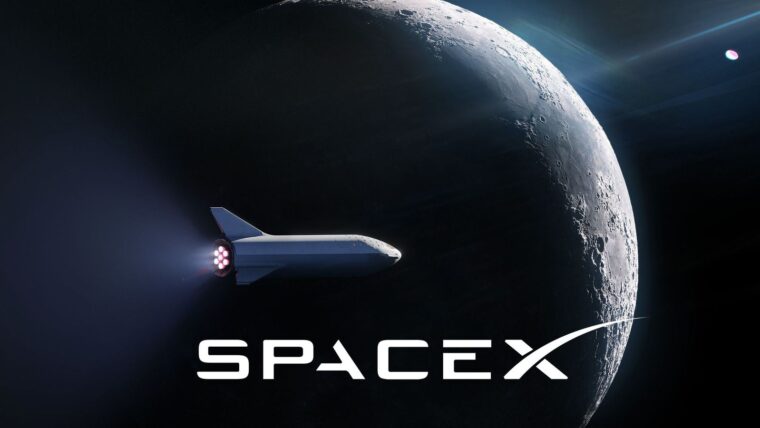
SpaceX said Wang will board its Starship spacecraft for a two-year mission designed to travel beyond the Earth-Moon system, conduct a fly-by of Mars, and return to Earth. The company did not provide specific launch dates for either Wang’s lunar or Mars missions.
Before the Mars trip, Wang is set to join SpaceX’s first commercial human spaceflight around the Moon on Starship. That mission is expected to last one week. Wang has already completed Fram2, SpaceX’s first crewed polar orbit mission, where he served as mission commander in 2025.
The Mars fly-by would mark a much longer and more technically demanding step than private astronaut missions in low Earth orbit. It also gives SpaceX another public test case for Starship as the company works to extend commercial human spaceflight beyond orbital tourism and into lunar and interplanetary routes.
What Role Does SpaceX See for Private Spaceflight?
SpaceX framed the planned missions as part of a broader effort to expand commercial space travel to the Moon and Mars. The company said it has safely flown 78 crew members to and from space across 20 missions since 2020, including 7 commercial and private astronaut missions.
That track record has helped move private spaceflight from a symbolic market into a recurring business line. The next phase is more difficult. A one-week lunar flight and a two-year Mars fly-by would test the ability of private missions to manage longer duration, greater distance, and higher operational risk.
For SpaceX, the participation of Wang also adds a cross-industry dimension. His background is not in aerospace but in bitcoin mining, a sector built around infrastructure, energy consumption, hardware cycles, and global network coordination. His presence on Starship links 2 industries that have both attracted capital around long-horizon technology bets.
Wang described the Mars mission as a shift from distance to proximity. “After we come back from Mars, we will have the opportunity to take some real photos, especially of Mars,” he said in a video released with the announcement. “Mars will no longer [be] a distant place. It will become reality.”
Investor Takeaway
The announcement is not a direct crypto market catalyst. Its relevance is reputational and symbolic: a founder from bitcoin mining is moving into one of the most visible private spaceflight programs, reflecting how crypto infrastructure wealth continues to intersect with frontier technology sectors.
How Does F2Pool Fit Into the Story?
Wang founded F2Pool in 2013 with Shixing Mao. The company grew quickly into one of the world’s largest bitcoin mining pool operators, giving miners a platform to combine computing power and share block rewards more predictably.
Mining pools became core infrastructure for Bitcoin because they reduced revenue volatility for individual miners and helped organize global hashpower across jurisdictions. F2Pool has remained one of the major names in that market. It currently holds an 11.5% market share, according to Hashrate Index data cited in the source material.
That position places Wang among the early operators who helped industrialize bitcoin mining. The sector has since moved from a niche hardware activity into a capital-intensive industry shaped by energy costs, ASIC supply chains, public-market miners, and geopolitical pressure around power use.
Wang’s move into private spaceflight does not change F2Pool’s role in mining, but it adds visibility to the personal fortunes and ambitions created by early crypto infrastructure. Unlike exchange founders or token issuers, mining pool operators are less visible to retail audiences, yet they helped build the operating layer that keeps proof-of-work networks running.
What Are the Market Implications?
The immediate market impact for bitcoin mining is limited. F2Pool’s share of network activity, mining economics, hashprice, power contracts, and bitcoin’s price remain more important for the sector than Wang’s participation in a SpaceX mission.
Still, the announcement matters for how crypto wealth is being redeployed. Early industry founders have increasingly moved capital and attention into adjacent technology sectors, including artificial intelligence, energy infrastructure, biotech, and space. Wang’s Starship role fits that pattern without implying any operational link between F2Pool and SpaceX.
For SpaceX, the mission adds another high-profile private participant to its Starship roadmap. For crypto, it is a reminder that the industry’s first major wealth cycle produced founders with the capital and public profile to enter markets far outside digital assets.
The larger story is not that bitcoin mining is going to Mars. It is that crypto’s infrastructure class is now appearing in arenas once reserved for governments, aerospace contractors, and ultra-wealthy private patrons. Wang’s planned fly-by will test SpaceX’s ambitions more than crypto’s, but it also shows how far the industry’s early operators have moved from the mining pool era that defined Bitcoin’s first decade.
