

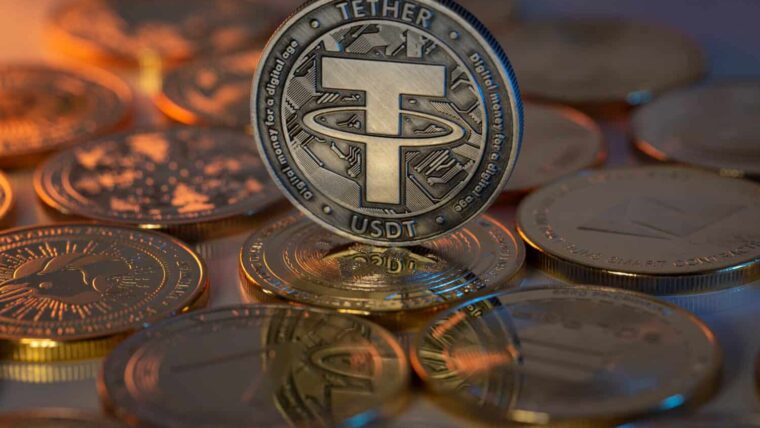
Why Are Tether and Gnosis Funding Sorted Wallet?
Tether and Gnosis have co-led a $4.4 million seed round for Sorted Wallet, a non-custodial crypto wallet built for mobile users in emerging markets.
The financing includes $3.4 million in equity funding from Tether and Gnosis, with additional participation from Movement, Angel Invest Group, and individual angel investors, including the founders of RWA.io. The investment gives Sorted new capital to expand in markets where mobile access, data costs, and device limits remain major barriers to crypto adoption.
Sorted was launched in 2022 and is designed as a lightweight wallet for lower-end mobile devices. According to the announcement, the app is 10MB, making it the lightest crypto wallet available on app stores. That detail matters because many users in emerging markets still rely on basic smartphones or stripped-down feature phones with limited storage and weaker connectivity.
The wallet has reached 500,000 downloads. Nigeria, Kenya, Tanzania, Bangladesh, and Madagascar are its fastest-growing markets, while the company also has market penetration in Central America, including Mexico.
What Does the Deal Say About Stablecoin Adoption?
The funding shows how stablecoin infrastructure is moving closer to consumer distribution in emerging markets. Tether’s USDT is widely used outside the U.S., often as a low-cost transaction tool and a dollar-linked store of value in markets where local currencies are volatile or banking access is limited.
Sorted gives Tether and Gnosis exposure to the wallet layer, where stablecoin usage can move from trading and transfers into day-to-day payments. For Tether, the deal fits with a broader push to support distribution channels that can place USDT in the hands of users beyond crypto-native traders. For Gnosis, the investment connects to its work in non-custodial infrastructure and real-world stablecoin use.
In the release, Tether CEO Paolo Ardoino said the firm has “reinvested” in Sorted Wallet, describing it as a product for “everyone, regardless of device, economic status, or location.”
“Over the years, digital asset use cases have evolved from trading tools to real-life applications, promoting financial freedom and inclusion. However, to achieve true inclusion, we must reach hundreds of millions of people who cannot afford smartphones or data plans,” Ardoino said.
Investor Takeaway
The investment is not only a wallet funding round. It is a bet that stablecoin adoption in emerging markets depends on distribution, device access, and mobile operator partnerships as much as blockchain infrastructure.
Why Are Sub-Saharan Africa and South Asia Central to Sorted’s Plan?
Sorted plans to use the new funding to expand geographically, with a focus on Sub-Saharan Africa and South Asia. These regions are central to the company’s growth case because they combine large mobile-first populations with uneven access to traditional financial services.
The company also plans to deepen integrations with mobile operators. That part of the strategy is important because wallet adoption in many emerging markets depends less on crypto branding and more on whether the product works inside existing mobile habits. Lower data usage, simple onboarding, and compatibility with cheaper devices can become stronger advantages than advanced trading features.
Sorted is also preparing to release a new payment mechanism in May, according to the announcement. The company did not provide full details in the source material, but the timing places payments at the center of its next growth stage.
What Are the Market Implications?
The deal places Sorted in a competitive area of crypto infrastructure where wallets, stablecoins, and mobile payments overlap. Non-custodial wallet providers are trying to reach users who may not care about trading but do care about receiving, storing, and sending digital dollars with low friction.
Gnosis investment partner Daniele Pinna said Sorted is “a key distribution layer for bringing stablecoin-based payments into real-world use, extending accessible financial infrastructure to users beyond the reach of traditional fintech.”
That framing explains why the funding matters beyond the size of the round. Tether and Gnosis are backing a product built around reach rather than complexity. If Sorted can grow in Sub-Saharan Africa and South Asia while improving payment functionality and mobile operator links, it could become part of the stablecoin payment stack in markets where traditional fintech coverage remains uneven.
The main execution risk is adoption quality. Downloads alone do not prove sustained wallet use, and emerging-market fintech products often face fragmented regulation, payment rails, device limits, and trust barriers. Still, the round shows that major crypto infrastructure players are willing to fund distribution layers that can carry stablecoins into practical, mobile-first use cases.
