

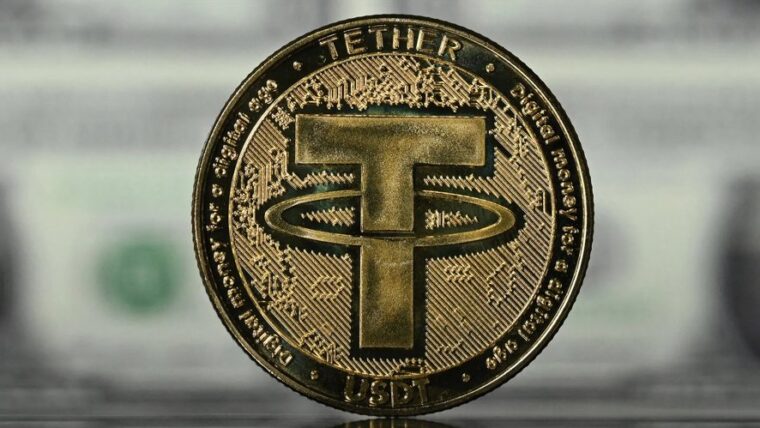
Tether has frozen approximately $515 million worth of USDT across Ethereum and Tron over the past 30 days, according to blockchain monitoring data from BlockSec’s USDT Freeze Tracker. The freezes involved hundreds of wallet addresses and marked one of the largest concentrated enforcement actions by the stablecoin issuer in recent months.
As of May 7, Tether had blacklisted between 371 and 384 addresses across the two blockchain networks, according to multiple reports referencing BlockSec data. Most of the frozen assets were located on the Tron blockchain, which accounted for approximately $506 million of the total, while Ethereum represented roughly $8.7 million.
The majority of the blocked addresses were linked to Tron, where reports indicated between 329 and 342 wallets were blacklisted during the 30-day period. Ethereum accounted for 42 frozen addresses.
The latest freezes underscore the extent of centralized control maintained by stablecoin issuers over digital assets circulating on public blockchain networks. While USDT transactions occur on decentralized infrastructure, Tether retains the ability to freeze tokens at the smart contract level when wallets are linked to sanctions violations, fraud investigations or illicit financial activity.
Neither Tether nor BlockSec publicly disclosed the identities behind the affected wallets or the specific investigations tied to the latest freezes. However, Tether has increasingly expanded cooperation with law enforcement agencies globally as regulators intensify oversight of stablecoins and blockchain-based financial networks.
Tron Continues to Dominate USDT Activity
The overwhelming concentration of frozen assets on Tron reflects the blockchain’s growing dominance within the USDT ecosystem. Tron has become one of the primary settlement networks for Tether due to its lower transaction fees and faster settlement times compared with Ethereum. Analysts estimate that Tron now processes a majority of global USDT transaction volume.
At the same time, regulators and blockchain analytics firms have repeatedly identified Tron as a network heavily used for high-volume stablecoin transfers linked to offshore trading, online gambling, sanctions evasion and fraud operations. Analysts said the latest freeze activity reinforces concerns among regulators regarding illicit finance risks associated with large-scale stablecoin flows on public blockchain networks.
The recent enforcement wave follows several other large Tether freezes earlier this year. In April, Tether announced that it froze more than $344 million in USDT on Tron in coordination with the U.S. government and the Office of Foreign Assets Control. The company said the action was tied to unlawful conduct investigations involving sanctioned entities and illicit financial activity.
According to Tether, the company now works with more than 340 law enforcement agencies across 65 countries and has frozen more than $4.4 billion in assets globally since launch. Over $2.1 billion of those freezes were reportedly linked directly to U.S. authorities.
The company has repeatedly emphasized that blockchain transparency and issuer-level controls make stablecoins easier to monitor and restrict compared with traditional cash-based financial systems. Tether CEO Paolo Ardoino recently said the company maintains a “zero-tolerance policy” toward criminal usage of USDT and works closely with regulators and investigators to identify suspicious activity.
Stablecoin Oversight Continues Expanding Globally
The growing scale of Tether’s freeze activity arrives as stablecoins face mounting regulatory scrutiny across the United States, Europe and Asia. Policymakers have increasingly focused on anti-money-laundering compliance, sanctions enforcement and systemic financial risks tied to dollar-backed digital assets.
Industry analysts said the ability of issuers like Tether to freeze assets remains controversial within parts of the crypto sector because it demonstrates that major stablecoins function more like centralized digital financial products than censorship-resistant cryptocurrencies. However, regulators and institutional financial firms increasingly view freeze controls as necessary for broader stablecoin adoption within regulated financial markets.
The latest enforcement activity also comes as Tether expands deeper into traditional finance and infrastructure investments. Earlier this week, Tether-linked entities completed additional investments tied to Gold.com while the company simultaneously continued expanding into artificial intelligence, tokenized assets and mining infrastructure.
