

What Does Tennessee’s New Law Prohibit?
Tennessee has enacted a full ban on crypto ATMs, making it a misdemeanor to operate or host the machines anywhere in the state. Governor Bill Lee signed House Bill 2505 into law on April 13 after it passed both legislative chambers unanimously, and it will take effect on July 1.
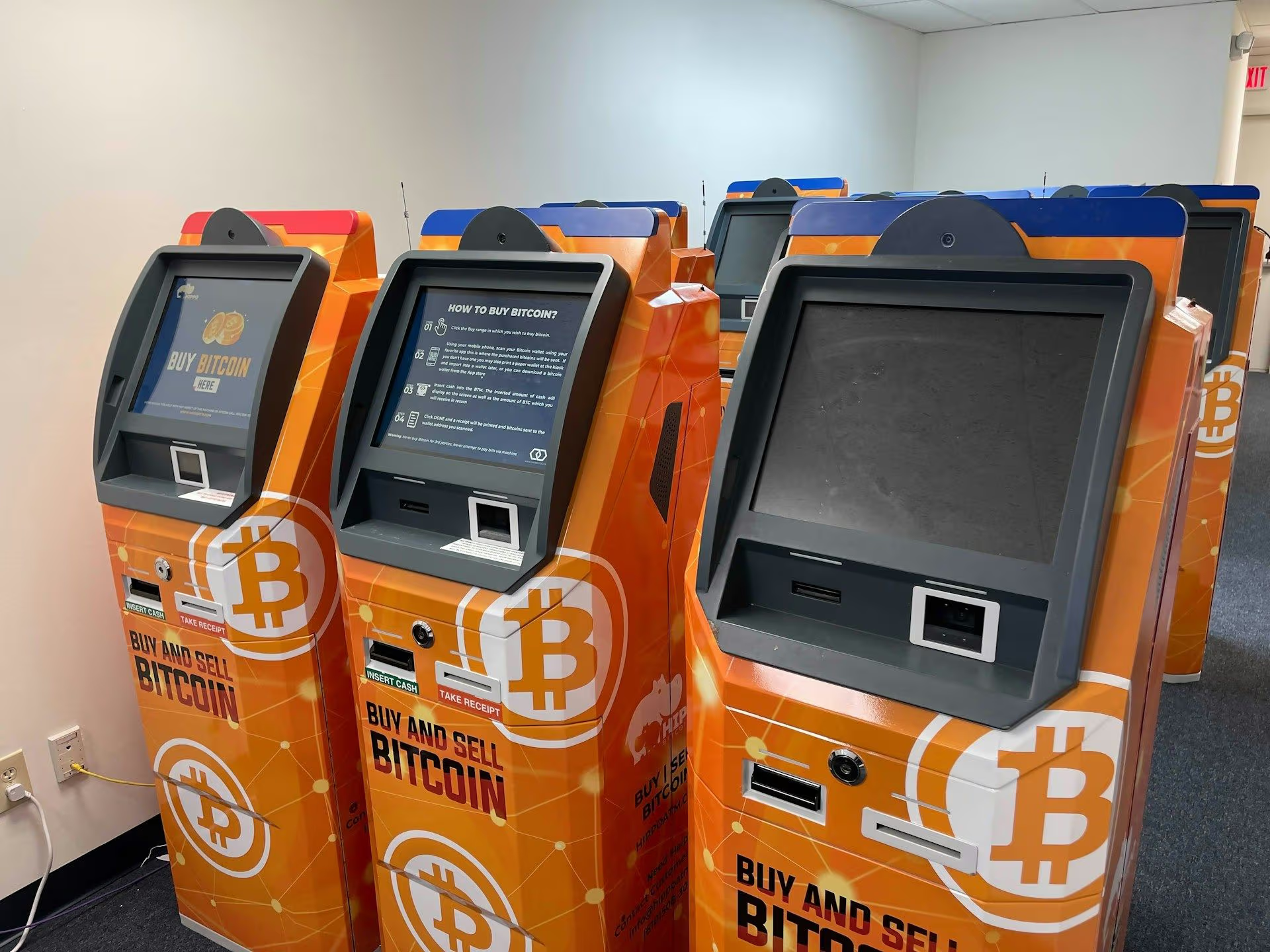
The law targets so-called “virtual currency kiosks,” commonly known as bitcoin ATMs, which are typically located in gas stations, convenience stores, and shopping malls. It extends liability beyond operators to include businesses that allow the machines on their premises.
Violations are classified as a Class A misdemeanor, carrying penalties of up to one year in prison and fines of up to $2,500. The scope of the law reflects a shift from regulating usage to eliminating the infrastructure entirely.
How Does This Fit Into Broader State-Level Action?
Tennessee is now the second U.S. state to implement a full ban on crypto kiosks, following Indiana, which passed similar legislation last month. Most other states have opted for stricter controls rather than outright prohibition.
According to an AARP report, 30 states have introduced legislation related to crypto kiosks in 2026, with 20 states having already enacted laws. These measures typically require operators to obtain licenses, impose daily transaction limits, and in some cases provide reimbursement mechanisms for scam victims.
The divergence in approaches highlights an ongoing debate among regulators: whether to manage risk through oversight or remove access points entirely.
Investor Takeaway
Why Are Crypto ATMs Under Scrutiny?
Crypto kiosks function as point-of-sale terminals that allow users to buy and sell digital assets using cash and transfer funds to external wallets. While the machines themselves are not inherently fraudulent, they have become a common tool in scam operations.
Fraud schemes often involve impersonation tactics, where scammers pose as law enforcement or government officials and pressure victims into transferring funds. Victims are instructed to withdraw cash, convert it into cryptocurrency at a kiosk, and send it to a specified address.
These schemes have resulted in substantial losses. FBI data shows that crypto kiosks were linked to nearly $390 million in reported fraud losses in 2025, with older individuals accounting for a disproportionate share of victims.
Investor Takeaway
What Are the Implications for the Crypto Ecosystem?
The removal of crypto ATMs in certain states reduces one of the few remaining entry points for cash-based participation in digital assets. This may limit access for users without banking infrastructure while pushing activity toward online platforms.
For operators and hosting businesses, the law introduces direct legal risk, eliminating a revenue stream tied to transaction fees and placement agreements. The inclusion of property owners in liability provisions broadens enforcement beyond traditional financial actors.
At a broader level, the move reinforces a trend toward tightening oversight of crypto-related services at the state level. As more jurisdictions evaluate similar measures, the operating environment for physical crypto infrastructure is likely to become increasingly constrained.
