

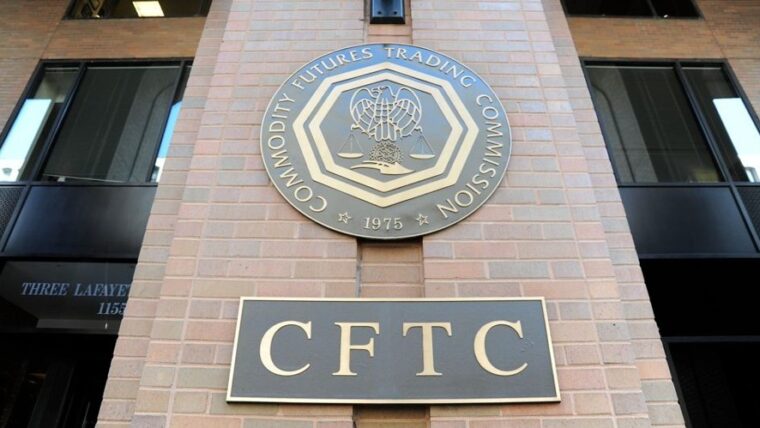
On April 13, 2026, Commodity Futures Trading Commission (CFTC) Chairman Rostin Behnam delivered a landmark address at the National Press Club, signaling a profound shift in the agency’s stance toward event-based derivatives and prediction markets like Polymarket. This “hardened” endorsement comes as a shock to a market that spent much of 2024 and 2025 mired in legal battles over the classification of political and event contracts. Behnam argued that the 2026 global landscape, characterized by rapid geopolitical shifts and the rise of “Information Finance,” requires a more flexible approach to price discovery. He emphasized that when platforms like Polymarket operate with transparent on-chain data and “hardened” KYC protocols, they provide the public with a more accurate “truth engine” than traditional polling or expert analysis. By acknowledging the utility of these markets for hedging real-world risks—ranging from election outcomes to supply chain disruptions in the Persian Gulf—the Chairman has effectively opened the door for a new era of institutional participation in the decentralized forecasting economy.
Transitioning from Enforcement to Collaborative Oversight
The Chairman’s remarks also touched upon the “normalization” of the relationship between federal regulators and decentralized protocols. Behnam noted that the CFTC’s recent legal victories in the Northern District of Illinois have provided a clear roadmap for how platforms can achieve “Designated Contract Market” status without sacrificing the efficiency of blockchain-based settlement. This new “collaborative oversight” model is intended to replace the “regulation by enforcement” strategy of previous years, providing a “hardened” legal safe harbor for platforms that voluntarily align with federal transparency standards. The agency is reportedly preparing a new “Event Contract Framework” for late 2026 that will allow for the listing of a wider variety of social and economic indicators, provided that the underlying data sources are verifiable and immune to manipulation. This shift is viewed as a direct response to the massive 40 billion dollar volume seen on prediction markets during the current fiscal year, a figure that has made it impossible for regulators to ignore the sector’s systemic importance to the broader financial architecture.
Harnessing the Wisdom of the Crowd for Global Risk Management
The most significant takeaway from Behnam’s address was the explicit recognition of “crowd-sourced intelligence” as a legitimate financial tool for the 2026 economy. The Chairman highlighted how prediction markets successfully priced the volatility of the recent “Operation Epic Fury” blockade days before traditional analysts, proving their value as a “real-time risk radar” for the U.S. government and private sector alike. By backing the integration of these markets into the regulated financial fold, the CFTC is effectively validating the “Information Finance” thesis popularized by venture firms like Paradigm and YZi Labs. For the 2026 participant, the Chairman’s backing represents the final “institutional seal of approval” for prediction markets. As the agency moves to finalize its new rule-making process, the focus remains on ensuring that these platforms can scale while maintaining the “hardened” integrity required to serve as the world’s primary forecasting utility. This historic pivot marks the end of the “fringe” era for Polymarket and the beginning of its life as a core component of the global financial infrastructure.
