

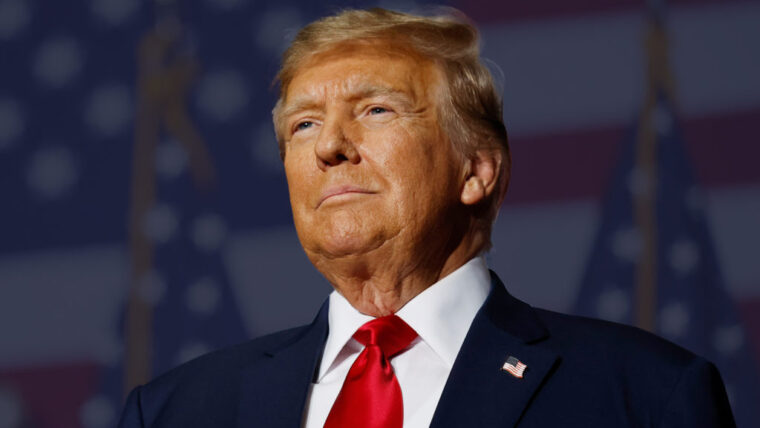
U.S. President Donald Trump is scheduled to address the nation on Wednesday evening with an update on the ongoing war with Iran, as the administration signals a potential shift toward de-escalation after weeks of sustained military engagement.
The address, set for 9:00 p.m. Eastern Time (6:30 a.m. IST Thursday), comes at a critical juncture in the conflict, now entering its fifth week following the launch of U.S. and allied strikes on Iran in late February. The White House has indicated that the speech will provide clarity on Washington’s next course of action, with markets and policymakers closely monitoring for signals on military, diplomatic, and energy policy direction.
Recent remarks from Trump suggest the U.S. may be preparing to wind down its involvement. The president has stated that American forces could withdraw within “two to three weeks,” arguing that key military objectives have largely been achieved. However, no detailed framework has been provided on the conditions required for a full exit or whether any formal agreement with Tehran is being pursued.
Conflict escalation and economic ripple effects
Despite emerging signals of de-escalation, hostilities across the region have continued. Recent attacks have targeted infrastructure in multiple Gulf states, including reported strikes affecting energy facilities and transport hubs. The widening geographic scope of the conflict has heightened concerns over regional stability and the security of critical trade routes.
The Strait of Hormuz, through which roughly 20% of global oil supply flows, remains a focal point of risk. Disruptions to shipping in the corridor have contributed to elevated energy prices, with crude oil benchmarks rising during the conflict and U.S. gasoline prices reaching multi-year highs.
Financial markets have responded sensitively to developments. Equity indices have shown volatility tied to geopolitical headlines, while energy-linked assets have outperformed amid supply concerns. At the same time, investor sentiment has been influenced by expectations that a near-term resolution could stabilize commodity markets and reduce inflationary pressure.
Public opinion has also shifted, with recent polling indicating growing domestic support for a rapid conclusion to the conflict, even if initial strategic objectives remain partially unmet. This backdrop adds political pressure on the administration to define a clear exit strategy.
Strategic uncertainty ahead of national address
The upcoming address is expected to clarify whether the U.S. intends to pursue a negotiated settlement, maintain limited military pressure, or proceed with a phased withdrawal independent of diplomatic outcomes. Trump has indicated that a formal deal with Iran may not be a prerequisite for ending the war, signaling a potential departure from traditional conflict resolution frameworks.
At the same time, the broader conflict environment remains fluid. Regional actors, including Gulf states and allied militias, continue to play active roles, while external powers have proposed ceasefire initiatives tied to the reopening of critical energy routes. The involvement of multiple stakeholders complicates efforts to achieve a rapid and stable resolution.
For global markets, the address carries implications beyond geopolitics. Energy pricing, inflation expectations, and risk asset performance remain closely linked to developments in the Middle East. A credible path toward de-escalation could ease volatility across commodities and equities, while renewed escalation risks extending current market dislocations.
As investors and policymakers await further details, the speech is expected to serve as a key signal of U.S. strategic direction in one of the most consequential geopolitical conflicts currently shaping global financial conditions.
