

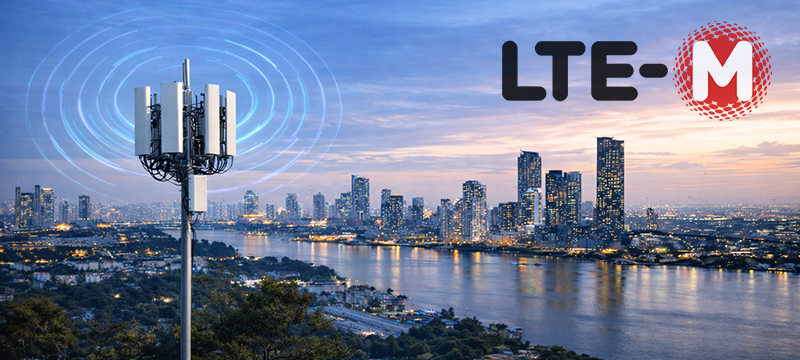
The rapid expansion of connected devices is pushing enterprises to rethink how machines communicate over wide geographic areas while maintaining energy efficiency and reliability. Cellular IoT technologies have emerged as a key enabler of this shift, offering standardized connectivity built on existing mobile network infrastructure. Among these technologies, LTE-M has gained significant traction for applications that require secure, low-power connectivity across large coverage areas.
Positioned between traditional LTE broadband and ultra-low-power LPWAN solutions, LTE-M addresses a specific class of IoT deployments that need mobility support, extended coverage, and moderate data throughput. From smart meters and asset trackers to industrial monitoring devices, LTE-M plays an increasingly important role in enabling scalable IoT connectivity across multiple industries.
Key Takeaways
LTE-M is a cellular IoT technology standardized by 3GPP that enables low-power wide-area connectivity using existing LTE networks.
It offers a balance between energy efficiency, coverage, mobility support, and data throughput for many IoT deployments.
Typical use cases include asset tracking, smart metering, healthcare devices, and smart city infrastructure.
LTE-M supports features such as power saving modes, extended coverage, and device mobility across cellular networks.
The technology is widely supported by mobile operators and is part of the broader evolution toward 5G IoT connectivity.
What is LTE-M for IoT: Benefits, Coverage and Deployment Scenarios?
LTE-M (Long Term Evolution for Machines), also known as LTE Cat-M1, is a cellular low-power wide-area technology designed specifically for Internet of Things devices that require wide coverage, moderate data rates, and extended battery life.
Standardized by the 3rd Generation Partnership Project (3GPP) as part of LTE Release 13, LTE-M operates within existing LTE networks but uses reduced bandwidth and optimized signaling to support low-power IoT devices. The technology allows connected objects such as sensors, meters, and trackers to communicate with cloud platforms through mobile network infrastructure.
In the broader IoT connectivity landscape, LTE-M sits alongside technologies such as NB-IoT, traditional LTE, and emerging 5G IoT capabilities. Its design focuses on balancing power efficiency with features that are essential for many real-world deployments, including device mobility and voice support.
How LTE-M for IoT: Benefits, Coverage and Deployment Scenarios works
LTE-M is built on the existing LTE cellular architecture but introduces optimizations tailored for IoT devices. Instead of requiring the full capabilities of broadband LTE connections, LTE-M devices operate within a narrower bandwidth while maintaining compatibility with LTE network infrastructure.
The typical communication architecture involves several components:
IoT device or sensor equipped with an LTE-M modem and SIM or eSIM.
Cellular base station (LTE eNodeB) that provides radio connectivity.
Mobile core network responsible for authentication, mobility management and data routing.
Cloud platforms or IoT applications that process device data and enable remote device management.
Devices using LTE-M communicate through licensed cellular spectrum, allowing mobile network operators to manage quality of service and interference. This distinguishes cellular IoT technologies from unlicensed LPWAN alternatives that operate in shared radio bands.
Several features improve efficiency for battery-powered IoT devices. Power Saving Mode (PSM) allows devices to enter deep sleep states between transmissions, while extended Discontinuous Reception (eDRX) enables longer intervals between network listening cycles. These mechanisms help extend battery life to multiple years depending on usage patterns.
Another notable characteristic of LTE-M is its support for device mobility. Connected objects can move across cellular cells while maintaining connectivity, making the technology suitable for mobile applications such as fleet tracking or connected logistics.
Key technologies and standards
The development and deployment of LTE-M relies on several technical standards and network capabilities defined by the 3GPP ecosystem.
3GPP Release 13 and later – Introduced LTE-M as a cellular IoT category designed for machine-type communications.
LTE Cat-M1 device category – Defines reduced bandwidth operation and simplified device capabilities.
Power Saving Mode (PSM) – Allows devices to enter ultra-low-power sleep states.
Extended Discontinuous Reception (eDRX) – Reduces energy consumption by extending paging cycles.
Half-duplex communication – Simplifies device radio design while lowering cost and power requirements.
Voice support via VoLTE – Enables applications such as emergency services or wearable devices.
Because LTE-M operates within LTE infrastructure, it benefits from existing cellular security mechanisms including SIM-based authentication, encrypted communication, and network-level device management.
Main IoT use cases
The combination of wide coverage, moderate throughput, and long battery life makes LTE-M suitable for a range of IoT applications that fall between ultra-low-power sensors and high-bandwidth connected devices.
Several industries are adopting LTE-M for large-scale IoT deployments.
Asset tracking and logistics – Mobile devices attached to containers, vehicles or pallets transmit location and sensor data across national or international transport networks.
Smart metering – Utilities deploy LTE-M modules in electricity, gas, or water meters to enable remote monitoring and infrastructure management.
Industrial IoT – Factories and infrastructure operators use LTE-M sensors to monitor equipment performance and environmental conditions.
Healthcare and wearables – Connected medical devices benefit from reliable connectivity and mobility support.
Smart city infrastructure – Applications include parking sensors, environmental monitoring, and connected street lighting.
In many of these deployments, devices transmit small packets of data periodically rather than continuously streaming large volumes of information. LTE-M’s bandwidth and energy profile align well with this type of communication pattern.
Benefits and limitations
LTE-M offers several advantages that make it attractive for IoT deployments requiring cellular-grade connectivity.
Extended coverage – Signal enhancements enable deeper indoor penetration and wider rural coverage compared with traditional LTE devices.
Mobility support – Devices can move across cellular cells without losing connectivity.
Energy efficiency – Power-saving features allow multi-year battery life in many applications.
Global cellular infrastructure – Deployments can leverage existing LTE networks operated by mobile carriers.
Secure connectivity – SIM-based authentication and cellular security frameworks protect device communications.
Despite these advantages, LTE-M is not suitable for every IoT scenario.
Higher module cost compared with some unlicensed LPWAN technologies.
Dependence on mobile network operators for connectivity.
Limited bandwidth compared with full LTE or 5G broadband services.
Not optimized for extremely low data rates where alternative LPWAN technologies may be more efficient.
As a result, technology selection often depends on the specific requirements of each IoT project, including coverage, energy constraints, mobility needs, and expected data volumes.
Market landscape and ecosystem
The ecosystem surrounding LTE-M includes a diverse set of stakeholders involved in device manufacturing, connectivity services, and IoT platform integration.
Mobile network operators play a central role by deploying LTE-M support within their LTE infrastructure. Many operators have introduced nationwide LTE-M coverage to address the growing demand for IoT connectivity.
Device manufacturers and module vendors integrate LTE-M modems into sensors, trackers, meters, and other connected equipment. Semiconductor companies develop the chipsets that power these modules, enabling low-power radio communication and cellular protocol handling.
At the software layer, IoT platforms provide device management, data processing, and analytics capabilities that allow enterprises to manage large fleets of connected devices. These platforms often support multiple connectivity technologies, allowing organizations to integrate LTE-M alongside other IoT communication standards.
System integrators and solution providers complete the ecosystem by designing and deploying end-to-end IoT systems tailored to specific industries.
Future outlook
The long-term role of LTE-M is closely linked to the evolution of cellular networks and the broader development of 5G IoT technologies. While 5G introduces new connectivity categories such as massive machine-type communications, LTE-M remains an important component of the cellular IoT roadmap.
Many operators plan to support LTE-M for years as part of their transition from LTE to 5G networks. The technology continues to evolve through additional 3GPP releases that improve energy efficiency, coverage performance, and integration with emerging IoT architectures.
For enterprises deploying connected devices today, LTE-M offers a mature and widely supported connectivity option with a clear migration path within the cellular ecosystem. Its combination of reliability, security, and network coverage positions it as a practical solution for many large-scale IoT deployments.
Frequently Asked Questions
What is LTE-M used for?
LTE-M is used to connect IoT devices that require wide-area cellular coverage, moderate data rates, and long battery life, such as asset trackers, smart meters, and environmental sensors.
How does LTE-M differ from NB-IoT?
LTE-M generally supports higher data rates and device mobility, while NB-IoT is optimized for very low-bandwidth stationary sensors.
Does LTE-M require new cellular infrastructure?
No. LTE-M can be deployed through software upgrades on existing LTE network infrastructure operated by mobile carriers.
How long can LTE-M device batteries last?
Battery life depends on transmission frequency and device design but can often reach several years when power-saving features are used.
Is LTE-M compatible with 5G networks?
LTE-M is expected to coexist with 5G networks and remain part of the cellular IoT connectivity landscape for many years.
Related IoT topics
NB-IoT connectivity
LPWAN technologies
5G massive IoT
Cellular IoT modules
eSIM and remote SIM provisioning
Edge computing for IoT
The post LTE-M for IoT: Benefits, Coverage and Deployment Scenarios appeared first on IoT Business News.
