

What Is Fellowship and Why Is It Entering US Elections Now?
The crypto sector’s Fellowship super PAC has made its first disclosed move in the 2026 US congressional elections, marking its formal entry into political spending after months of inactivity. The committee, previously described as having $100 million in pledged backing, reported a $300,000 expenditure tied to advertising efforts in a recent federal filing.
The spending was directed toward Georgia Republican Clay Fuller, who recently won a special election to replace Marjorie Taylor Greene in the House of Representatives. However, Fellowship did not publicly announce the ad buy or include Fuller in its earlier endorsement lists, leaving the scope of its support unclear.
The PAC has not yet disclosed any incoming contributions and has not responded to questions regarding its funding sources or broader election strategy. This creates a disconnect between its earlier positioning as a major crypto political force and its current limited financial footprint.
Why Did the First Payment Go to a Tether-Linked Firm?
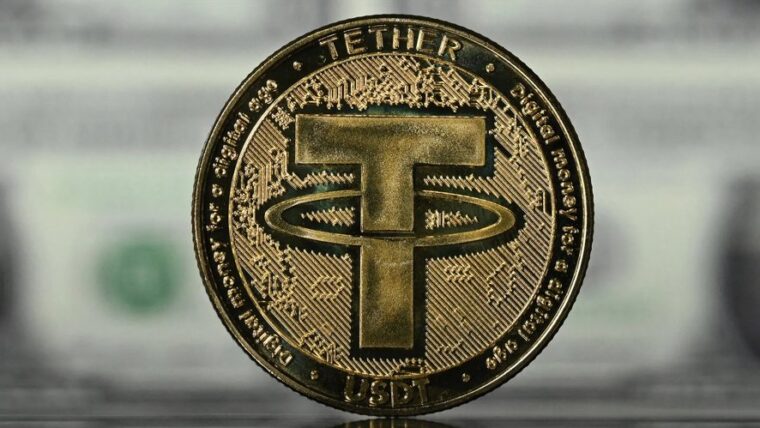
The initial $300,000 payment was made to Nxum Group, an advertising firm co-founded by Bo Hines, now CEO of Tether US and a former crypto adviser to President Donald Trump. The transaction raises scrutiny given the overlap between the PAC’s reported ties to Tether and the involvement of an entity connected to one of its senior executives.
Fellowship has not commented on the relationship, and a spokesperson for Tether International stated that it has no affiliation or oversight over the PAC. No clarification was provided regarding Tether US.
Regulatory guidance suggests that such arrangements are not prohibited under US campaign finance rules, provided services are legitimate and priced at fair-market value. “There is no blanket prohibition on self-dealing when we’re talking about political committees like this,” said Michael Beckel of Issue One. “The general rule is that services need to be rendered that are bonafide services — actual services — and those rates that are paid have to be fair-market rates.”
Investor Takeaway
What Does This Say About Crypto’s Political Strategy?
Fellowship’s activity reflects a broader effort by the crypto sector to expand its political influence ahead of a potentially decisive election cycle for digital asset regulation. The PAC recently named Jesse Spiro, a Tether US executive, as its chairman and has begun promoting candidates aligned with digital asset policy priorities.
“The Fellowship PAC will begin actively supporting candidates aligned with this vision — leaders who recognize the importance of fostering economic growth and reinforcing the United States as the global leader in next-generation financial infrastructure,” the organization said in a statement.
Despite this positioning, the PAC’s current filings show no available funds beyond the initial expenditure, raising questions about whether the previously cited $100 million in commitments has materialized. Federal disclosures often lag, but the absence of visible funding limits its immediate impact.
At the candidate level, Fuller has not publicly outlined a clear stance on crypto policy, indicating that early support may be based more on political alignment than sector-specific advocacy.
Investor Takeaway
How Does Fellowship Compare to Other Crypto PACs?
Fellowship enters a landscape already dominated by established crypto political players such as Fairshake, which has deployed millions of dollars across early primary contests. By comparison, Fellowship’s initial spending remains limited, suggesting it is still in the early stages of execution.
The broader election backdrop adds complexity. With shifting probabilities around control of Congress and increasing scrutiny of financial and technology sectors, crypto firms may need bipartisan support to protect and advance regulatory objectives.
While Fellowship has so far focused on Republican candidates, many of them in strongly conservative districts, future effectiveness may depend on its ability to expand beyond a narrow political base.
The coming months will determine whether the PAC scales its activity in line with earlier expectations or remains a marginal player in an election cycle that is likely to influence the direction of US crypto legislation.
