

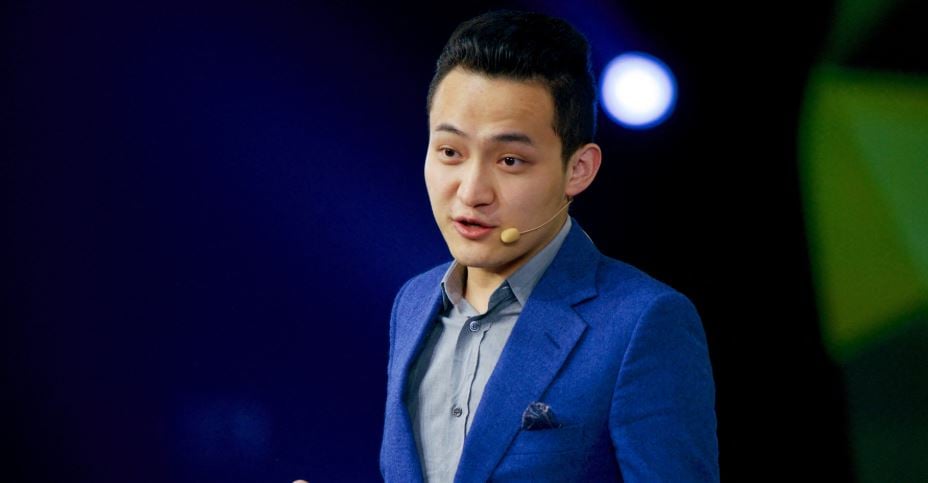
Why Did Justin Sun Turn Against WLFI?
Justin Sun has publicly broken with World Liberty Financial (WLFI), accusing the project of extracting illegitimate fees and mishandling user funds following a controversial DeFi transaction. Once a major backer, Sun now describes himself as the project’s “first and single largest victim,” pointing to governance concerns and past actions taken against his holdings.
“Every action taken by the WLFI team to extract fees from users and to treat the crypto community as a personal ATM is illegitimate,” Sun wrote.
His criticism follows a sharp decline in WLFI’s token price, which is trading around $0.079 after losing 18% over the past week. The dispute marks a high-profile fallout between a major crypto figure and a project previously tied to political branding and retail investor interest.
What Happened in the $75 Million DeFi Loan?
The backlash centers on WLFI’s decision to deposit 5 billion WLFI tokens as collateral on the DeFi lending platform Dolomite and borrow approximately $75 million in stablecoins. The transaction quickly dominated the protocol, accounting for a majority of its roughly $794 million in total supply liquidity.
At its peak, a key stablecoin pool reached 100% utilization, effectively locking ordinary depositors out of their funds. While utilization later eased to around 82%, with $158 million borrowed against $193 million supplied, the incident exposed liquidity concentration risks within the platform.
To support the transaction, Dolomite raised its WLFI supply cap to 5.1 billion tokens. The scale of the position, combined with overlapping roles between WLFI and Dolomite leadership, has drawn scrutiny from onchain analysts.
Investor Takeaway
How Did Governance and Wallet Freezes Escalate the Conflict?
The dispute also traces back to WLFI’s decision in 2025 to freeze Sun’s wallet, locking him out of 595 million tokens valued at roughly $107 million at the time. The project said the action was part of a broader blacklist targeting wallets linked to phishing attacks and compromised channels.
Sun disputes that explanation, framing the freeze as a violation of investor rights and a turning point in his relationship with the project.
“I am the first and single largest victim,” he said, adding that the blacklist “violates basic investor rights and blockchain principles of fairness.”
He also challenged the legitimacy of governance decisions used to justify the freeze, alleging that voting processes lacked transparency and that outcomes were predetermined.
“These actions have nothing to do with me. They have nothing to do with the investors who believed the promises this project made,” Sun said. “We oppose every one of these actions in the strongest possible terms.”
Investor Takeaway
What Does This Mean for WLFI and the Broader Market?
The fallout highlights the fragility of projects that combine political branding, retail participation, and complex DeFi strategies. Losing a high-profile backer adds pressure at a time when token performance is already under strain.
At the same time, Sun’s comments carefully separate his criticism of WLFI’s operators from broader political affiliations, focusing instead on project-level decisions and governance practices.
