

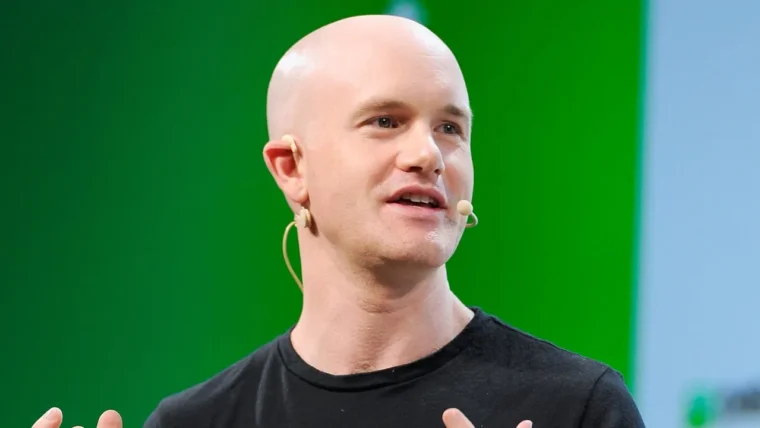
On April 3, 2026, Coinbase CEO Brian Armstrong announced that he will begin “spending time personally” to lead a new industry-wide coalition dedicated to making the Bitcoin network quantum-resistant. This declaration follows the startling “Willow” research paper from Google Quantum AI, which demonstrated that a 500,000-qubit machine could theoretically crack Bitcoin’s current elliptic curve cryptography in under nine minutes. Speaking at the “Security at Scale” summit in San Francisco, Armstrong emphasized that the “quantum threat” is no longer a theoretical concern for the next generation, but a defined engineering challenge that requires immediate, “hardened” action from the world’s leading digital asset custodians and developers. As part of this initiative, Coinbase has committed 150 million dollars to the “Quantum Defense Fund,” which will provide grants to core developers working on the implementation of post-quantum cryptography (PQC) signatures directly into the Bitcoin protocol via a future soft fork.
Accelerating the Transition to Winternitz Signatures and BIP-360
The core of Armstrong’s personal mission is to accelerate the adoption of “BIP-360,” a proposal that introduces quantum-resistant Winternitz One-Time Signatures (WOTS+) to the Bitcoin network. Unlike the current ECDSA standard, Winternitz signatures are based on “hash-based” cryptography, which is widely considered to be immune to the “Shor’s Algorithm” utilized by quantum computers to derive private keys from public keys. Armstrong noted that while these signatures are larger and more computationally intensive, the “hardened” security they provide is a non-negotiable requirement for the 2026 financial system. The new coalition, which includes engineers from Block, Jack Dorsey’s TBD, and the Bitcoin Core team, is currently testing a “dual-signature” model that would allow users to move their funds from legacy “1…” and “3…” addresses into new “quantum-safe” vaults. This transition is being described as the “most important upgrade in Bitcoin’s history,” surpassing even the 2017 SegWit and 2021 Taproot activations in terms of technical complexity and long-term systemic importance.
Securing the Global Reserve Asset for the Post-Quantum Era
Armstrong’s shift toward a “personal focus” on cryptography signals a broader change in the role of crypto-exchange CEOs, who are increasingly acting as the “security architects” of the decentralized world. By taking a direct hand in the quantum resistance debate, Armstrong aims to prevent a “liquidity panic” that could occur if institutional investors believe their “digital gold” is vulnerable to a state-sponsored quantum attack. Coinbase is already planning to roll out “Quantum-Proof Custody” as a standard feature for its institutional Prime clients by late 2026, utilizing a hybrid model that combines traditional encryption with the latest NIST-standardized PQC schemes. For the 2026 participant, Armstrong’s leadership provides a “confidence anchor” in an era of rapid technological disruption. The success of this personal commitment will be measured by the network’s ability to reach a “rough consensus” on the PQC upgrade without triggering a contentious chain split. As the “9-minute threat” continues to loom in the headlines, the focus remains on whether the Bitcoin community can move with the “hardened” speed necessary to outpace the engineers at Google and IBM.
