

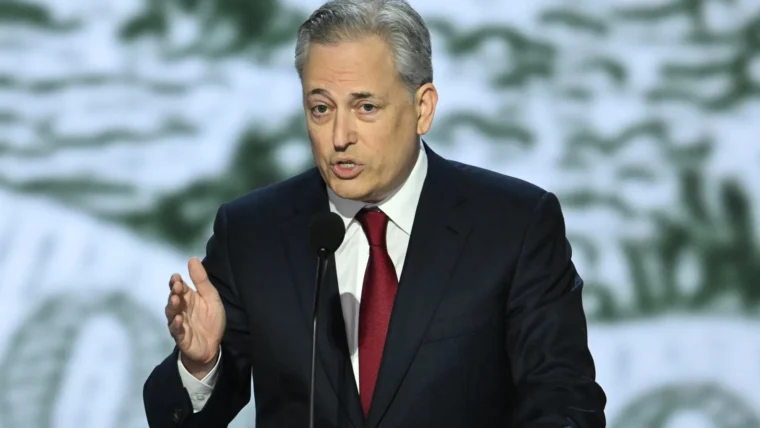
David Sacks has stepped down from his role as the White House’s artificial intelligence and crypto czar, marking the conclusion of his formal tenure overseeing U.S. digital asset policy. The move follows the expiration of his term as a special government employee, a designation that limits service to 130 days within a 12-month period.
Sacks, a venture investor and former PayPal executive, was appointed to the role in late 2024 as part of a broader effort to recalibrate U.S. policy toward cryptocurrencies and emerging technologies. During his tenure, he played a central role in shaping a more industry-aligned regulatory posture, including efforts to advance clearer legal frameworks for digital assets and reduce friction for innovation-focused firms.
Despite relinquishing the official title, Sacks is not exiting policymaking entirely. He is set to serve as co-chair of the President’s Council of Advisors on Science and Technology (PCAST), a federal advisory body composed of industry leaders and academic experts. In this capacity, he will continue to influence policy across artificial intelligence, digital assets, and broader technology domains.
Policy Continuity Despite Role Transition
The transition reflects structural constraints rather than a shift in policy direction. Under U.S. regulations governing special government employees, individuals in advisory roles are restricted in the number of days they can formally serve, requiring periodic rotation or reassignment.
Sacks’ continued involvement through PCAST suggests that policy continuity will be maintained, particularly in areas related to crypto market structure and innovation. The advisory council is expected to include senior executives and investors, positioning it as a key interface between government and the private sector on emerging technologies.
During his tenure as crypto czar, Sacks was involved in initiatives aimed at strengthening U.S. competitiveness in digital assets, including efforts to clarify regulatory jurisdiction and support the development of domestic crypto infrastructure. His role also extended to broader strategic discussions on artificial intelligence and national technology priorities.
Industry participants have viewed his tenure as indicative of a shift toward a more pragmatic regulatory approach, emphasizing innovation and market development alongside oversight.
Market and Regulatory Implications
Sacks’ departure from the formal role introduces some uncertainty regarding the structure of crypto policymaking within the White House. There are currently no confirmed plans to appoint a direct successor, raising the possibility that responsibilities may be distributed across existing agencies or advisory frameworks.
However, his continued presence in an advisory capacity is expected to mitigate concerns about abrupt policy changes. Analysts note that continuity in leadership and strategic direction remains critical for the digital asset sector, particularly as regulatory clarity continues to influence institutional participation and capital allocation.
The shift also reflects a broader trend in U.S. technology governance, where advisory councils and external experts play an increasingly prominent role in shaping policy outcomes. By transitioning to PCAST, Sacks retains a platform to influence decision-making across multiple domains, including AI, semiconductors, and digital infrastructure.
For the crypto market, the development is unlikely to result in immediate regulatory changes but reinforces the importance of individual policymakers in shaping the trajectory of U.S. digital asset regulation. Continued engagement from figures with strong industry ties may support ongoing efforts to balance innovation with regulatory oversight.
As the United States continues to define its approach to digital assets, Sacks’ transition highlights both the evolving structure of policy leadership and the enduring influence of key individuals in guiding regulatory direction.
